
Advancing Digital Transformation in Quality Infrastructure: Brazil–Germany Working Group Meets in Hannover
Brasilien
During a full day of activities, a delegation from the German Federal Ministry for Economic Affairs and Energy (BMWE) visited the Hanover fairgrounds to promote key digital topics on the ongoing bilateral relations between Brazil and Germany on Quality Infrastructure.
Tour at the 'Hannover Messe'
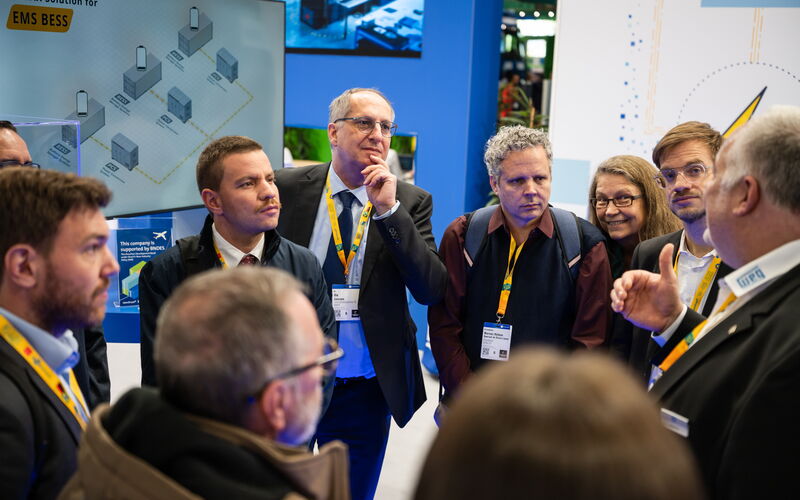
At Hannover Messe 2026, where Brazil was featured as the official partner country, the Global Project Quality Infrastructure (GPQI) hosted a specialized tour on April 22 to highlight the digital transformation of QI in Industry 4.0. Commissioned by BMWE alongside the Annual Meeting of the German-Brazilian Working Group, the tour guided a joint delegation of German and Brazilian QI and industry representatives.
The itinerary focused on the practical application of Digital Product Passports (DPPs), digital Solutions for Machinery, innovative AI solutions, while also featuring technical showcases at Platform Industrie 4.0's "Manufacturing-X" exhibit, global technology provider WEG, and the Physikalisch-Technische Bundesanstalt (PTB) booth, underscoring interoperability as the backbone of future international trade.
Panel: Digital product passport in action – a live demonstrator of EU-Brazil connectivity
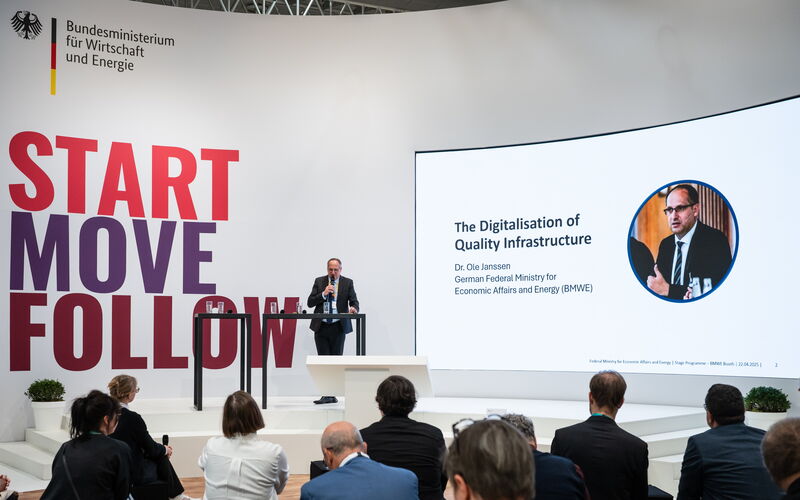
On April 22, 2026, the BMWE booth at the Hannover Messe hosted a dynamic panel session titled "The Digitalisation of QI," highlighting the critical role of data spaces in building a trust-anchored ecosystem for DPPs. Dr. Ole Janssen (BMWE) opened the event by outlining the strategic and regulatory frameworks needed to foster interoperable standards and cross-border cooperation.
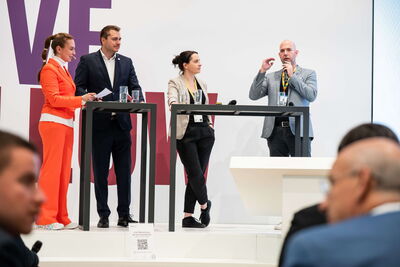
Technical experts and industrial leaders from Germany and Brazil—including Claudia Koch (BAM), Andreas Faath (VDMA), and Maurício Finotti (ABINC)—then showcased real-world applications of Asset Administration Shell (AAS) submodels and OPC UA specifications. The session concluded with a fast-paced panel discussion focused on achieving international interoperability and leveraging agreements like the EU-Mercosur framework to facilitate trusted, seamless global data collaboration.
7th Annual Meeting of the GER-BRA WG on Quality Infrastructure
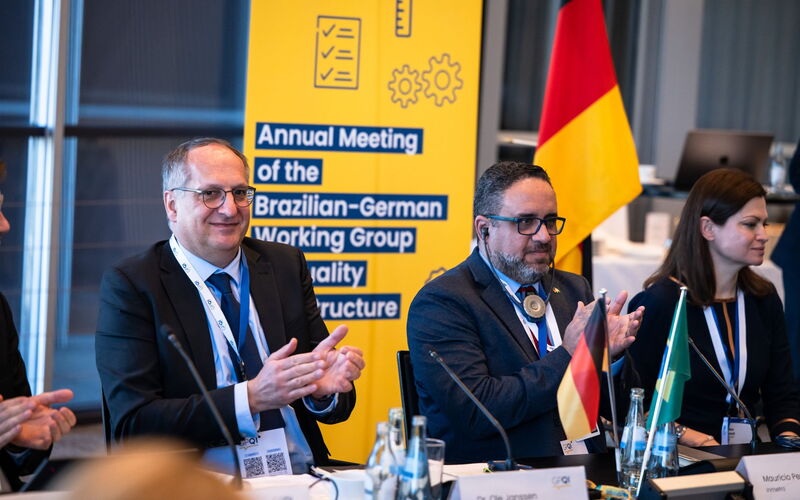
The Brazilian–German Working Group on Quality Infrastructure (WGQI) held its Annual Meeting last Wednesday in Hannover, reaffirming the strategic partnership between both countries in strengthening QI and fostering innovation-driven trade.
Organised under the leadership of BMWE and the Brazilian Ministry of Development, Industry, Commerce and Services (MDIC)—which joined remotely—the meeting brought together a broad range of stakeholders from government, industry, and key QI institutions from both countries. The WGQI continues to serve as a central platform for bilateral dialogue, engaging ministries, regulators, standardisation bodies, and private sector representatives to reduce technical barriers to trade and enhance product safety.
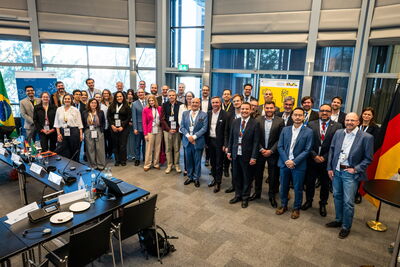
Building on this long-standing cooperation, participants in Hannover actively contributed to discussions on current and future project lines, with a strong focus on the digital transformation of QI systems. In particular, the exchange highlighted the growing importance of digital tools and frameworks that enable more efficient, transparent, and internationally aligned QI processes.
A key topic of the meeting was the development and implementation of DPPs, which are expected to play a crucial role in enhancing traceability, transparency, and sustainability across global value chains. Discussions also addressed the role of standardisation in emerging technologies, especially artificial intelligence (AI), emphasising the need for harmonised and trustworthy frameworks to support innovation while ensuring safety and compliance.
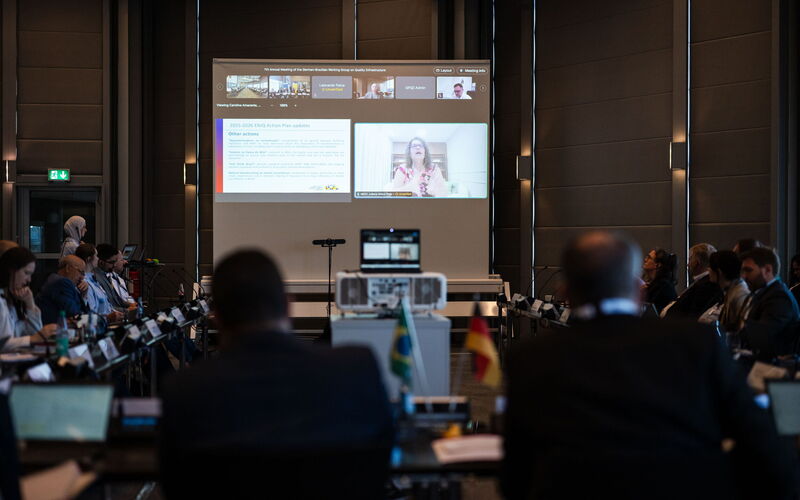
Furthermore, participants explored approaches to modernising market surveillance in the context of digitalisation and the rapid expansion of e-commerce. Strengthening surveillance mechanisms and improving regulatory cooperation were identified as essential steps to ensure product compliance in increasingly complex and digitalised markets. These priorities closely reflect ongoing bilateral efforts, where digitalisation, AI standardisation, and e-commerce market surveillance have already been identified as key areas of cooperation.
The Annual Meeting in Hannover once again demonstrated the strong commitment of Brazil and Germany to advancing quality infrastructure as a driver of economic development, innovation, and sustainable trade. By aligning their efforts on digital transformation and emerging technologies, both countries continue to pave the way for more resilient and future-oriented QI systems.